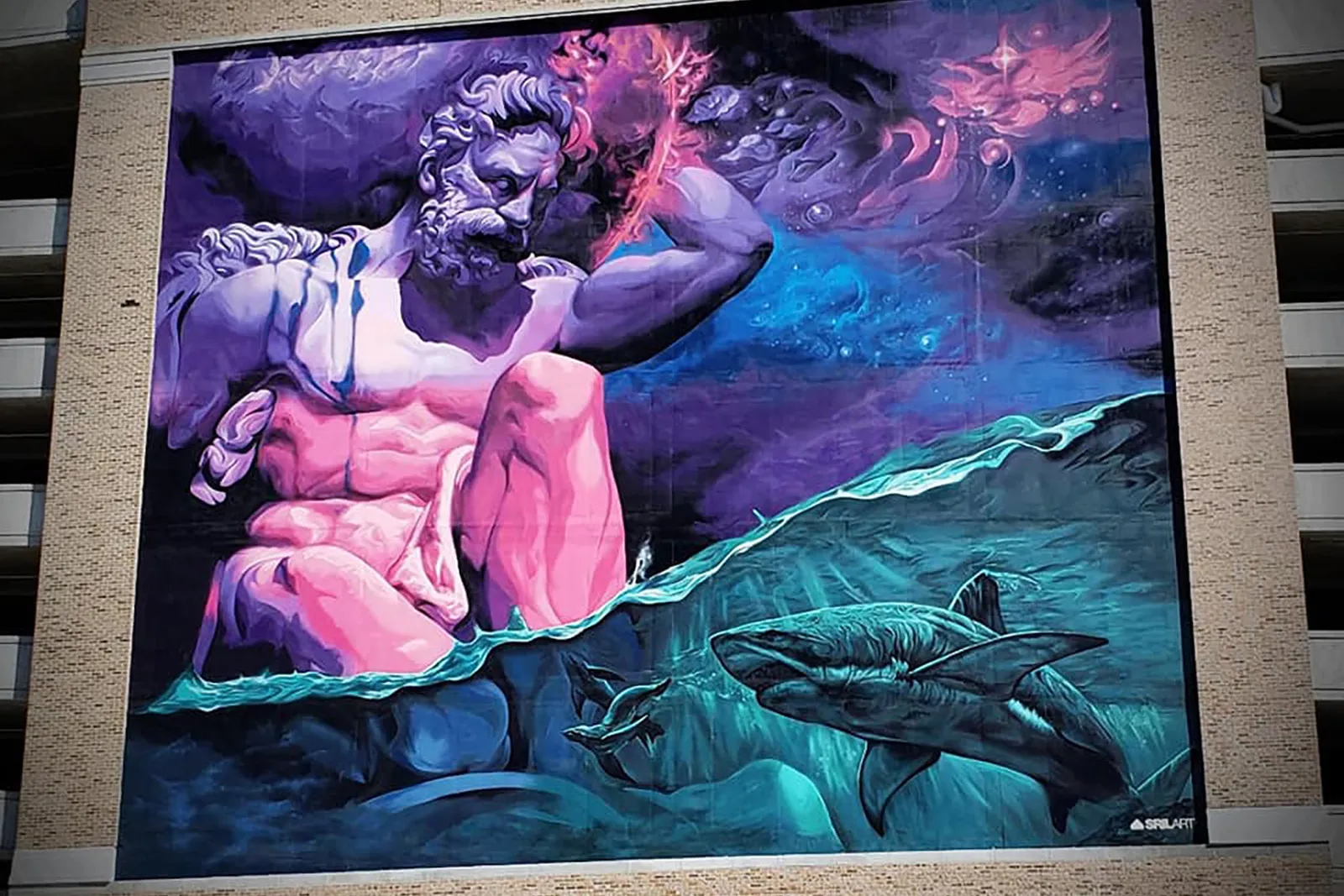
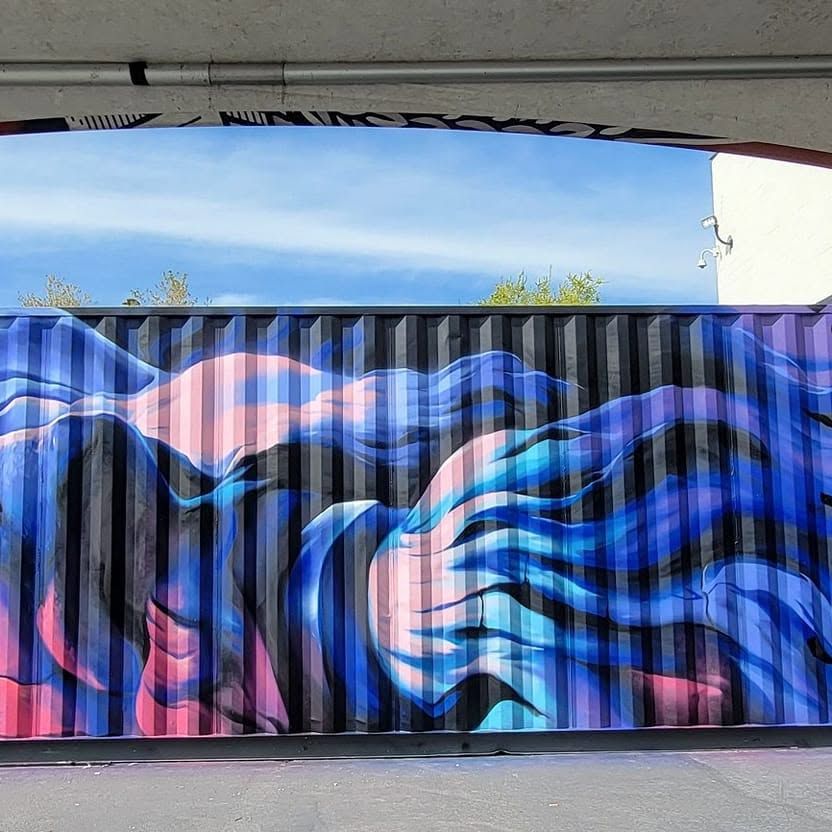
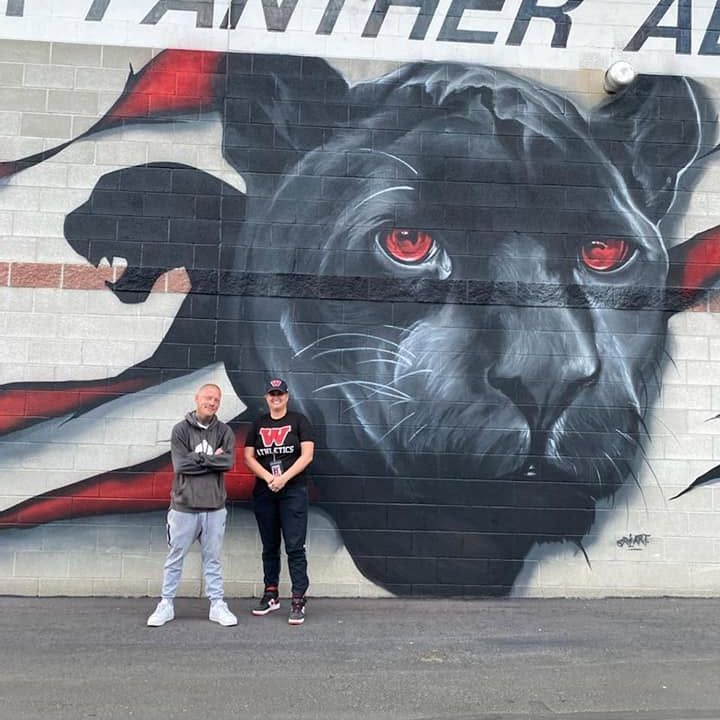
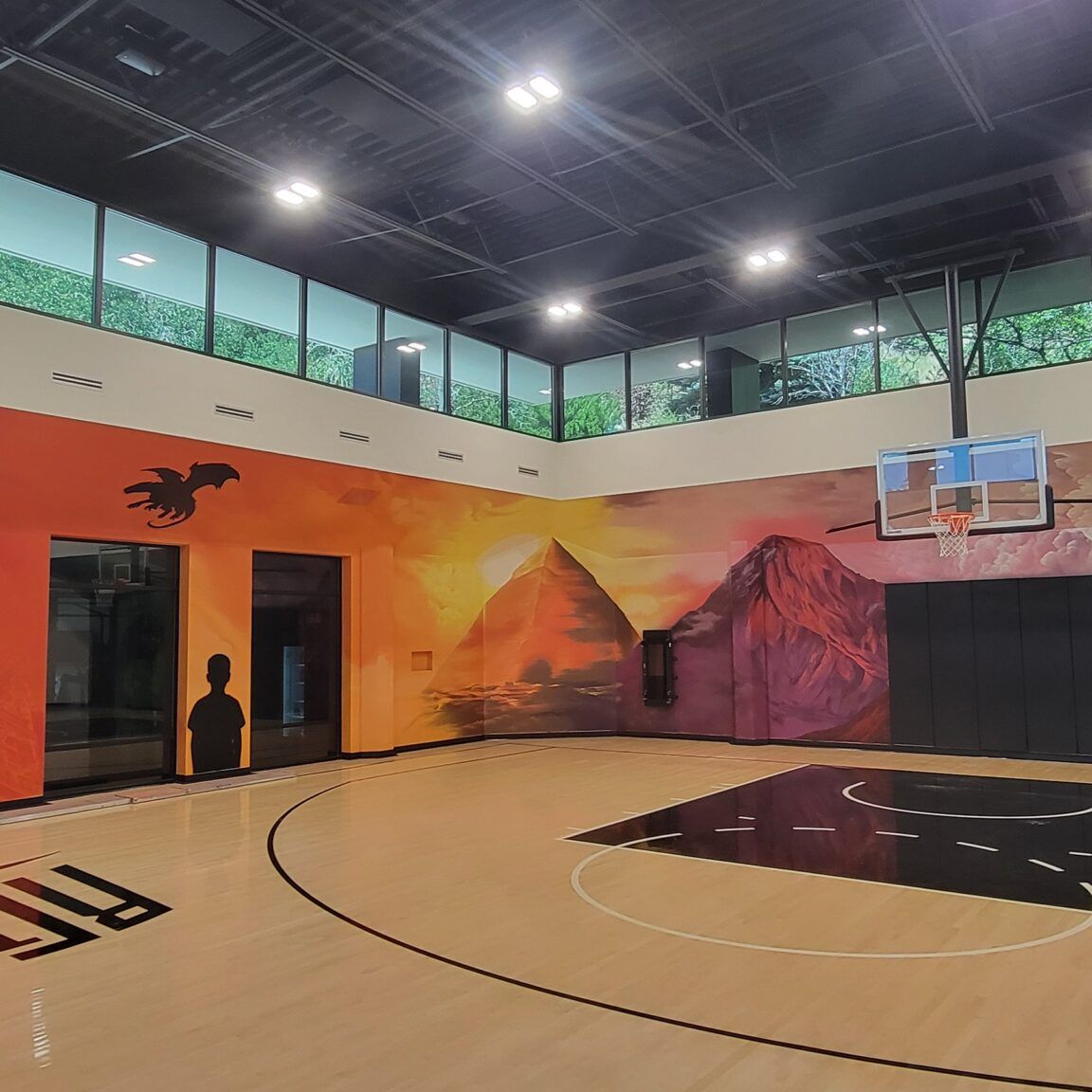
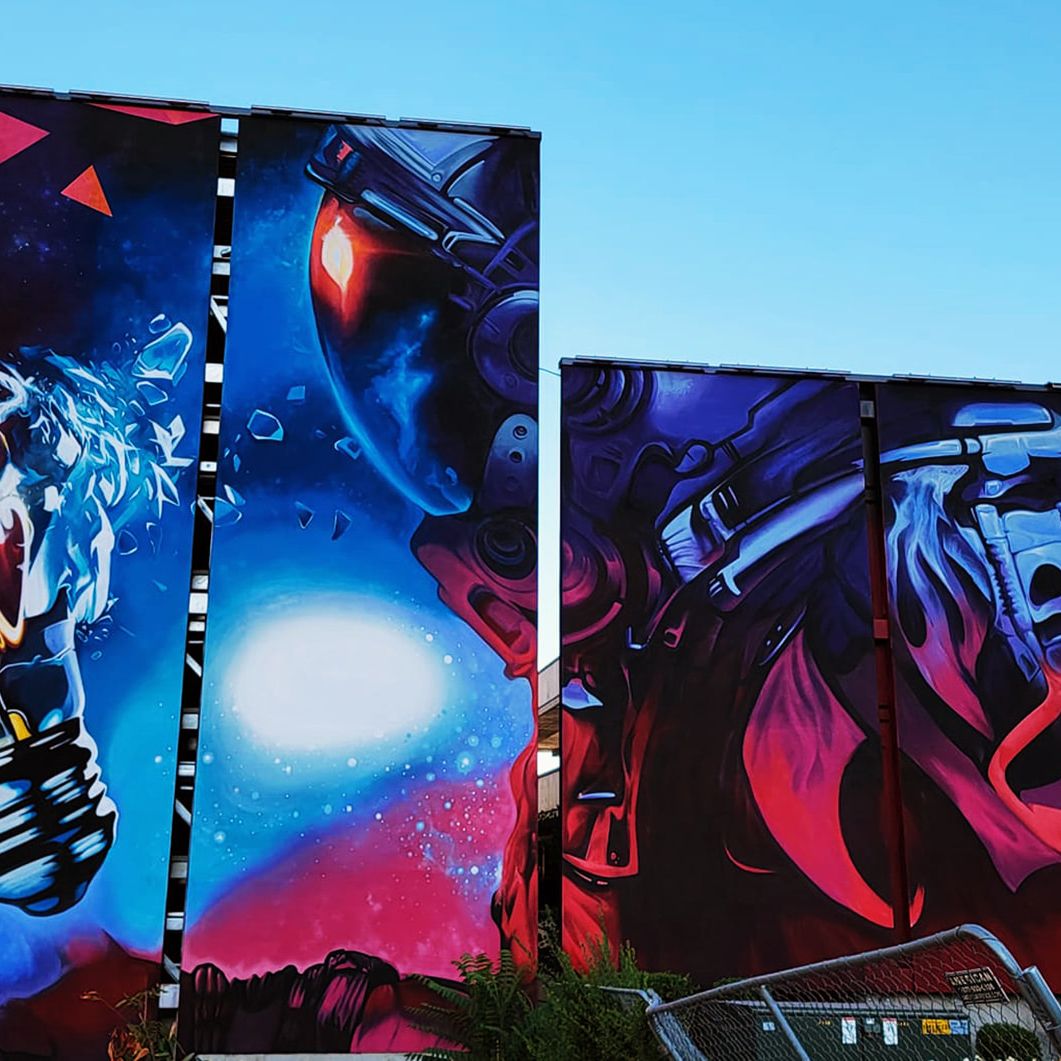
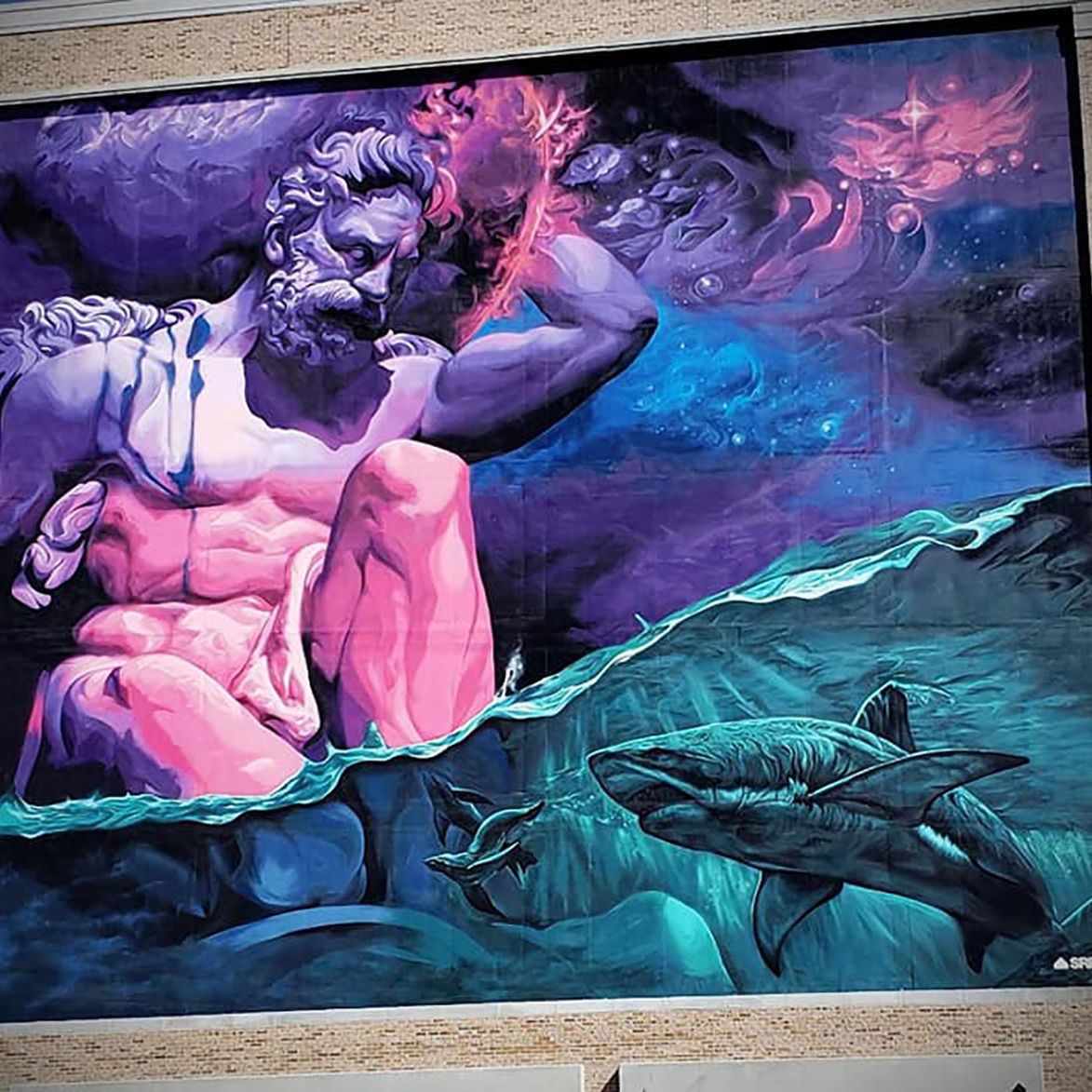
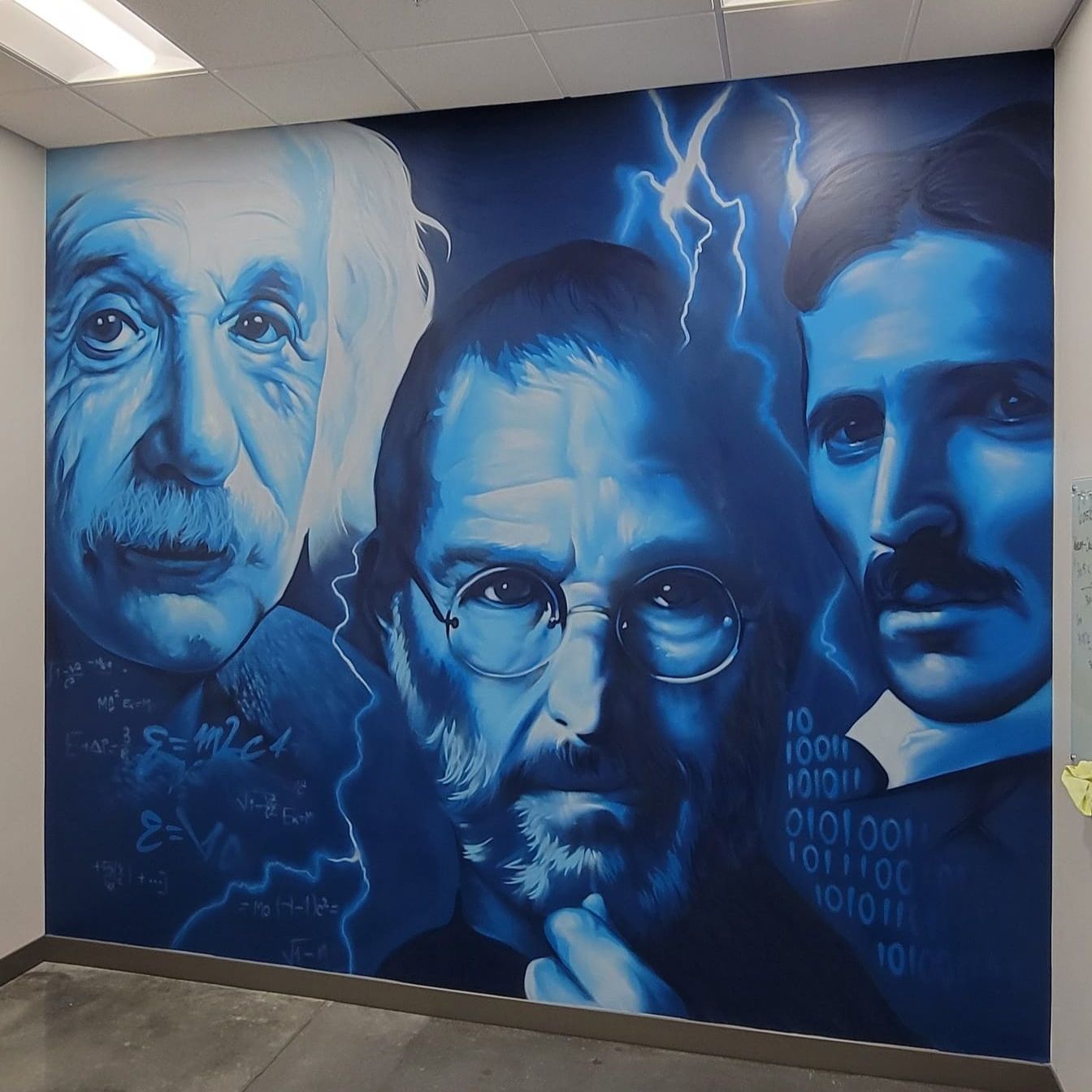
Salt Lake City is where SRIL ART is based, and where most of its landmark work stands. Atlas, at the North Temple Frontrunner Station, covers more than 3,600 square feet on an 85-foot vertical wall, one of the largest murals in Utah. Commissions here have run from that exterior landmark to interior branding for PEG Companies and a private basketball court for Rudy Gobert. Reddit’s downtown office got Success Kid on its wall before the company moved out of the space, and the mural turns up in BuzzFeed’s documentary about the meme. The Complex commissioned a Greek god down the side of a shipping container downtown in 2024, painted sideways so the figure fits the length of the steel.
Mural artist, muralist, mural painter: Salt Lake City uses all three for the same job, and here they mean one person, who designs the wall and then paints it freehand.
Commissioning a mural here is deliberately unhurried. It starts with the wall: photographs, measurements and what the space is for. From there comes a written proposal with a fixed price, a concept drawn to the actual dimensions, and a schedule. Nothing is painted until the concept is approved, and the price on the proposal is the price at the end. Local mural commissions typically run from $35 to $55+ per square foot depending on height, surface and detail, and estimates for Salt Lake City projects are free.
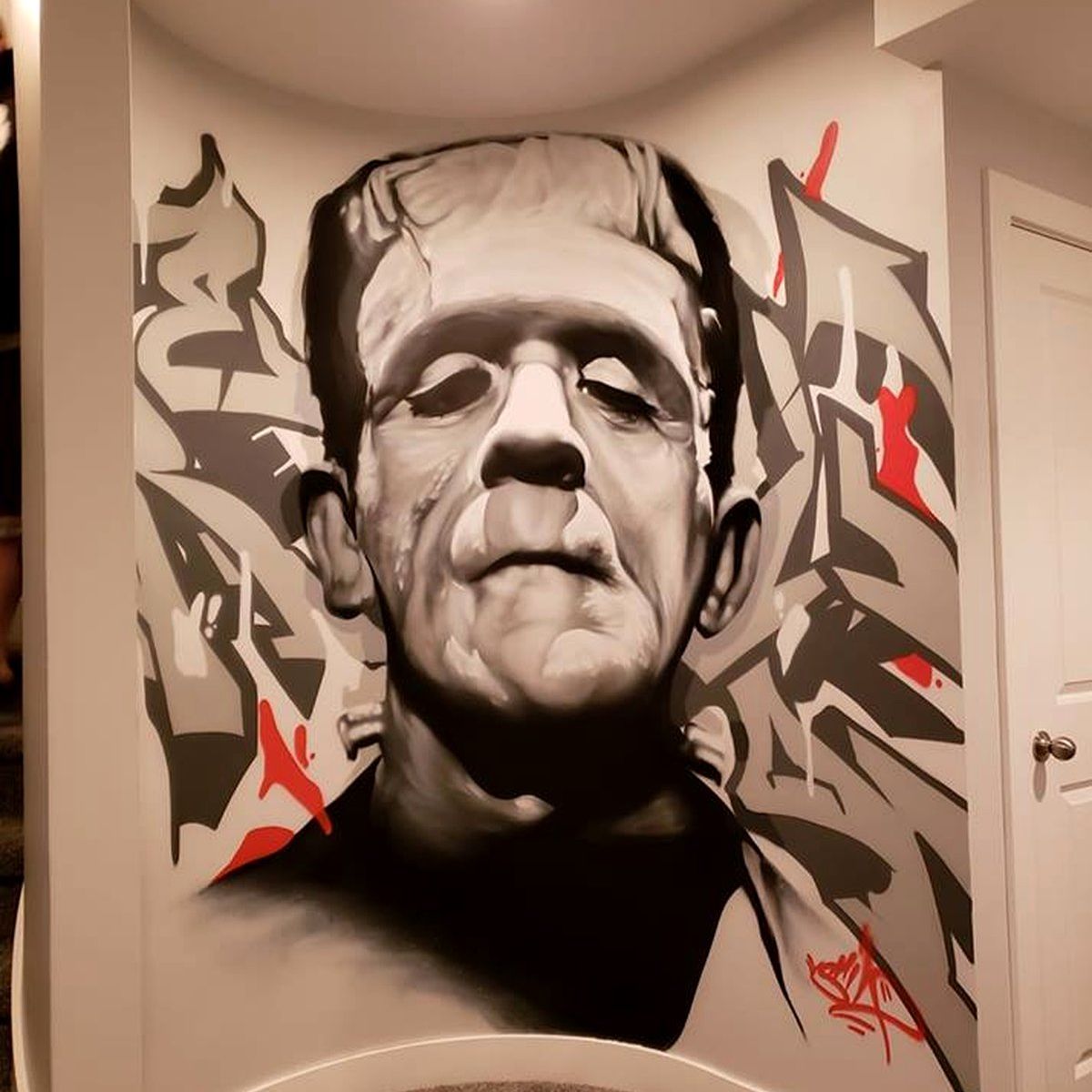
Commercial murals and residential murals want different things from the same craft. A commercial wall is usually about being recognized: office branding that photographs well for a company’s own marketing, a lobby that gives visitors something to stand in front of, or an exterior that turns a building into a landmark people give directions by. Residential work is quieter and more personal, from a feature wall in a single room to a full court like Rudy Gobert’s. Both are painted freehand in aerosol, no stencils and no projections, on brick, stucco or concrete.
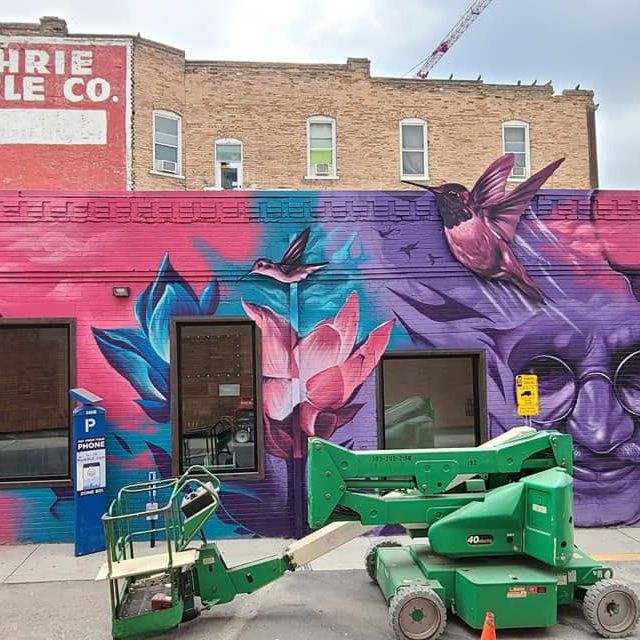
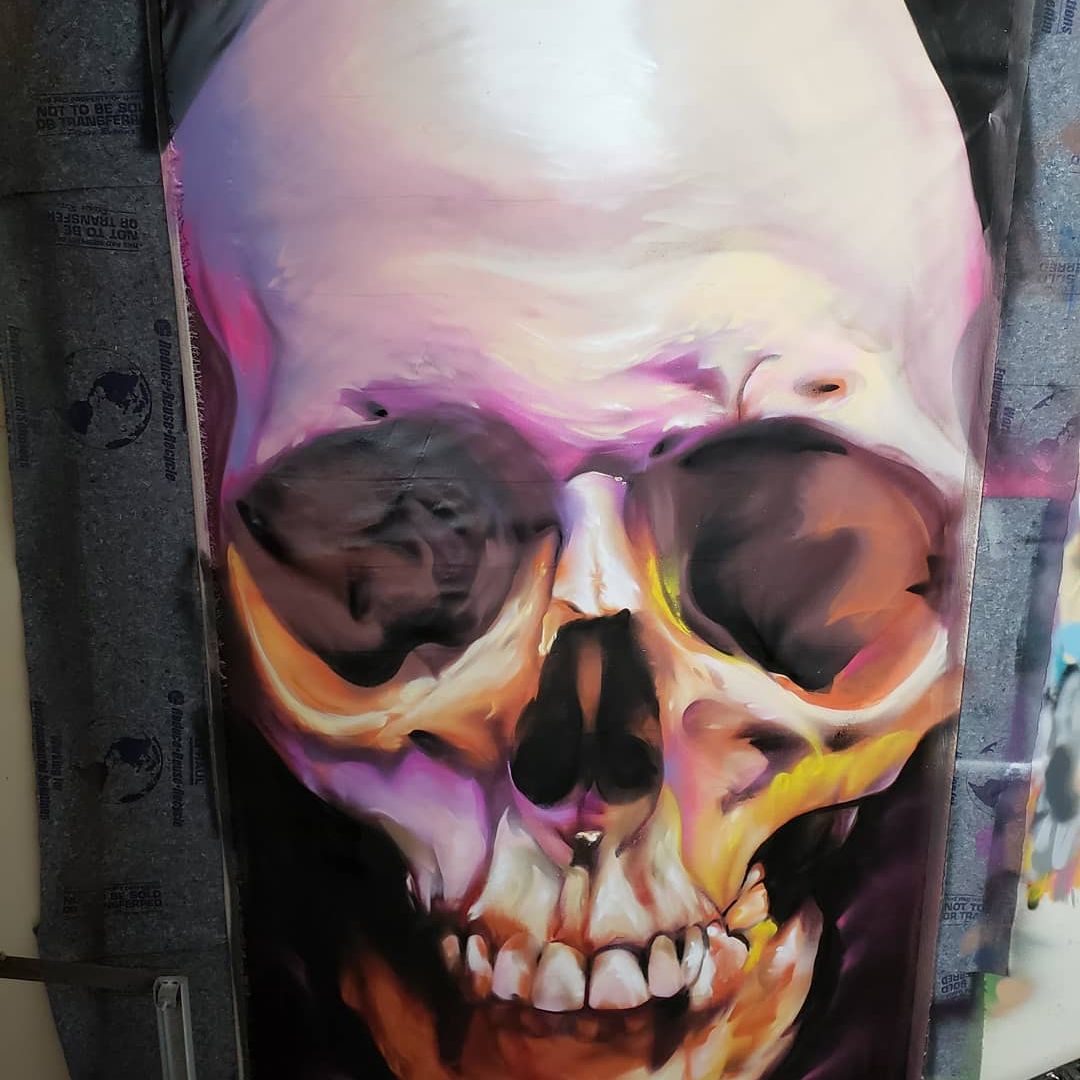
Color is usually what people recognize first, before they work out what the subject is. The loudest example is Edison Street, a whole storefront in saturated magenta, purple and teal, carried straight over the door frames and window reveals instead of stopping at them, with hummingbirds painted far larger than life so they still read from across the road. Atlas puts a red nebula above a turquoise sea, and took 1,400 cans of paint in 45 colors to do it, a number City Weekly reported while it was still going up. Godlike runs a blue god through purple smoke and into fire. The drawing is photo-real and the palette deliberately is not, and that pairing is what lets a wall read from across a parking lot and still hold together close up. Clients who want a vibrant, saturated mural rather than a muted one tend to arrive already knowing which of the two they are after. For what it is worth, the color has been strong enough to legislate about: in 2017 a proposed South Salt Lake wall in bright purple, pink and red led the city to rule that murals there be painted in neutral earth tones, which both the Salt Lake Tribune and Artists of Utah reported at the time.
Not every commission wants a recognizable subject. Abstract mural commissions come up often enough in Salt Lake City that they are worth saying something about: a lobby or a facade where the client wants color, scale and movement rather than a face or a logo. The Complex is the clearest example, forty feet of blue and salmon on a shipping container downtown that almost nobody reads as a figure, and the texture there is real rather than painted, since the surface is ribbed steel that slices every curve into segments. Abstract work is quoted the same way as everything else, by square foot, surface and height.
Most interior mural painting in Salt Lake City takes two to four days on site. Exterior walls take longer and depend on the weather, so the useful time to start a conversation about an outdoor wall is well before the season you want it finished in.